
Rainbow
Intercultural
Dialogue
Center
"The harmony of different colors"
The Role of The Family in The Education
Discussion Panel
EVENT DETAIL
 Role of The Family in The Education |  Role of The Family in The Education |
|---|---|
 Role of The Family in The Education |  Role of The Family in The Education |
 Role of The Family in The Education |  Role of The Family in The Education |
 Role of The Family in The Education | 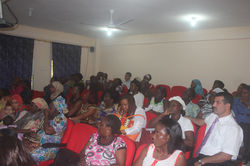 Role of The Family in The Education |
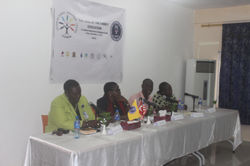 Role of The Family in The Education |
Concept Note/ Background to Panel Topic
Rainbow Intercultural Dialogue Center and the Liberian-Turkish Light International School are inspired to facilitate a panel of mutual respect and collaboration that welcomes varied points of view and voices on vital issues that our parents/families are facing regarding their roles and responsibilities in education.
Public opinion and school institutions tend to accuse parents of not taking an interest in school issues and abdicating their educational responsibilities. On the other hand, families seem more concerned than ever about their children’s schooling, academic results, the quality of the education they receive and the good name of the schools where they are educated. However, family strategies to guarantee the quality of education are largely individual.
In contrast, in many countries around us, and increasingly in this country, families have begun to demand a greater presence in policy definition and school life. Sometimes, teachers also often lack the time and opportunity to work on family involvement. They see it as an additional task on their already long list of responsibilities.
Staff misperceptions about families’ abilities obstruct strong family involvement. In some schools, staff may feel that parents are unable to help their children because of their limited educational backgrounds.
Purpose:
The purpose of this panel is to generate solutions for vital issues that our parents/families are facing, making the schools and parents/families know their responsibilities regarding their involvement, and responsibilities in education as they elaborate on the topic, “THE ROLE OF THE FAMILY IN EDUCATION,” with the following sub-points:
-Parent-child relationship in education
-Daycares, Eventide Houses and Family
-Domestic violence against students
-Religion and family policies in education
-Understanding ourselves and children
-First teachers-Best allies in educating children
-Achieving universal primary education
-Promoting gender equality and empowering women.
-Values in education: Democratic values
-Reward and praise in education: When, how, and for what purpose?
-The education of gifted children
-How can we motivate our children to learn?
-The role of the teacher
-Discipline in the home
-How to make our children love reading
-Children and violent computer games
-Cultural considerations in education
-The age of education
-Parents’ rights in education
-Children’s rights at school
-Home and school
-Punishment and education
-Parent and teacher relationships
-Friends and environment
-Starting school age
-Talent and art
-The effect of the family’s socio-economic status to its success
-Key roles families play in education and upbringing of the child
-Important roles of the family in developing positive behavior of children
-The effects of the personality and character development of children in the family
ABSTRACT: The results from this panel discussion on “The Role of The Family In Education” will highlight student and school success in the following:
-
Children who come from families that have a supportive attitude towards education tend to have higher school success rates.
-
The care, compassion, and protection in the family emerge as important factors to increase student and school success.
-
It is observed that children living with adoptive families have high success rates when provided with proper care and compassion.
-
Children whose parents have regular communication with the school according to a mutually agreed program and provide educational support by means of this common understanding have higher school success rates.
The good of our children depends on adults being good families/parents.
Goals
Goal 1: Achieve universal primary education.
Goal 2: Promote gender equity and empower women
Goal 3: To reinforce family and school cooperation